
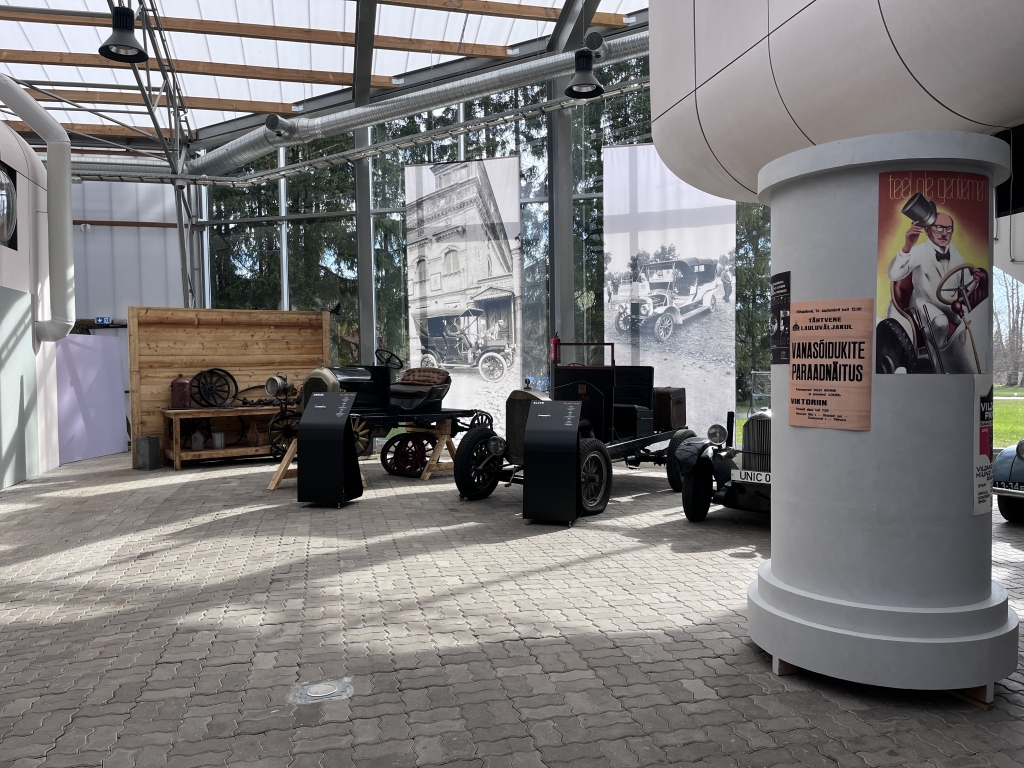
The Argus, believed to date from the first decade of the 20th century, was found in a flax-soaking pit near Kohila in the late 1970s. The Elite, dating from the early 1920s, was discovered near Nuia. Although both vehicles have survived only partially, have been supplemented multiple times, and still raise more questions than answers regarding their original construction, they remain authentic vintage technology artifacts. They also reflect the period half a century ago when broader public interest in historic vehicles first emerged in Estonia. The machines have previously been exhibited at several events organized by the Unic club (1976–1994), at Palmse Manor, and most recently in Valeri Kirss’s private museum in Virtsu. Since May, they can be viewed at the Estonian Road Museum.
The first automobile arrived in Estonia in 1902, and by 1914 there were only 162 cars in the country. According to Valeri Kirss, by the early 2000s only 3–4 vehicles with major components dating from before the 1920s and discovered in Estonia had survived.
The Argus and Elite have now been integrated into the machine hall’s automobile culture exhibition, which explores the development of the automobile and its role in society. These vehicles add the elite early era of motoring to the renewed permanent exhibition — a time when every machine represented a unique technical solution. The display also serves as a tribute to Valeri Kirss’s life’s work, thanks to which these vehicles have been preserved and are now accessible to the public.
The new exhibition is open to visitors Monday through Sunday from 10 AM to 6 PM.

